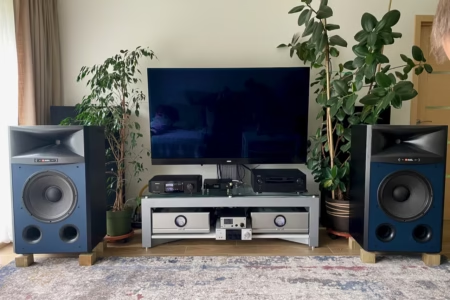
 First step to improve
Before implementing any enhancements to your audio experience, it is essential to conduct a thorough evaluation of your existing audio system. This initial assessment is crucial as it will inform you about the components you currently possess. Such as speakers, amplifiers, and source devices. Each of these elements plays a significant role in your overall listening experience.
The first step to improve, is by examining your speakers. Their placement is a key factor that can significantly affect sound quality. Ideally, speakers should be positioned at ear level and away from walls to minimize reflections that can distort sound. Take note of the distance between the speakers and the listening position. A typical listening triangle can help ensure a balanced audio output. Additionally, ensure the speakers are appropriate for the size of the room and they are functioning correctly.
Next, analyze your amplifier. This component is crucial as it powers your speakers and influences the audio signal’s quality. Check the specifications of your amplifier to ensure it matches your speakers’ requirements. An underpowered amplifier can distort sound, while an overpowered one can potentially damage your speakers. Consider the quality of the cables connecting your audio components as well. Poor quality cables can lead to signal loss and an overall diminished sound experience.
Finally, assess the condition of all components, including your source devices. Dust, wear, and age can impact performance, causing everything from reduced clarity to unwanted noise in the audio signal. Cleaning and inspecting these devices can help restore their function. By understanding these fundamental elements of your audio system, you will be better equipped to identify areas for improvement and elevate your listening experience.
Optimizing Speaker Placement
Proper speaker placement is a fundamental aspect of enhancing the sound quality of your audio system. The positioning of speakers affects the overall listening experience. Including the clarity, depth, and balance of sound. To maximize performance, it is essential to consider several factors, such as distance from walls, height, and angling. These elements play a crucial role in achieving an optimal audio environment.
One key concept in speaker positioning is the ‘golden triangle.’ This principle recommends arranging the speakers and the listening position in an equilateral triangle formation. Where each side should be of equal length. Typically, the speakers should be positioned at least a few feet away from walls to minimize reflections that can muddle the sound. Placing speakers too close to walls can cause bass frequencies to overwhelm higher ones, leading to an unbalanced audio experience.
Furthermore, the height at which speakers are positioned is also vital. Ideally, the tweeters of the speakers should be at ear level when seated, ensuring that high-frequency sounds are delivered directly to the listener. If your speakers are too low or too high, the sound can become skewed, resulting in a less enjoyable audio experience.
Angling the speakers towards the listening area can further improve sound distribution. Experimenting with the angle can lead to a more focused soundstage and clearer vocal reproduction. Users may find that small adjustments can yield significant results in audio quality.
To find the perfect setup for your space, consider experimenting with different positions and configurations. Move the speakers around and listen to the changes in sound. Taking the time to understand and apply these principles of placement can greatly enhance your listening experience. And, transforming a poor audio system into one that delivers clear and immersive sound.
Upgrading Components for Better Sound
Once the existing audio system has been thoroughly evaluated and speaker placement optimized. The next crucial step towards enhancing your listening experience is to consider upgrading the components of your system. A well-chosen upgrade can significantly change the overall sound quality, transforming a lackluster audio experience into a rich auditory journey. Key components to evaluate for upgrades include speakers, amplifiers, and Digital-to-Analog Converters (DACs).
Investing in higher-quality speakers is often regarded as one of the most impactful upgrades. The speakers serve as the primary interface between the audio source and your ears. Therefore, their quality greatly affects sound reproduction. Look for speakers that have a good reputation in terms of sound clarity and fidelity. Research customer reviews and seek out trusted brands, focusing on specifications that align with your listening preferences.
Amplifiers also play a pivotal role in delivering high-quality sound. A robust amplification system ensures that the audio signal is powerful enough to drive the speakers effectively. When selecting an amplifier, consider the power rating and ensure compatibility with your new speakers in terms of impedance and performance. This will guarantee that the overall system works cohesively without any bottlenecks.
Lastly, DACs are essential for converting digital audio signals into analog signals accurately. As many audio sources have shifted to digital formats, a high-quality DAC can enhance your audio experience immensely. Look for DACs that support various formats and sample rates, allowing for a versatile listening experience that meets your specific needs.
As you make your decisions regarding upgrades, always keep in mind your budget, ensuring that each new component provides real value in improving sound quality. Think about compatibility with existing gear and your listening habits. An informed approach ensures that your investment yields a noticeable enhancement in your audio system’s performance.
Incorporating Room Acoustics and Treatments
Room acoustics significantly influence the overall sound quality of an audio system. Understanding how sound interacts within a space is crucial for optimizing listening experiences. One effective method of improving audio performance is through the implementation of room treatments, which include acoustic panels, bass traps, and diffusers. Each of these elements plays a specific role in managing sound reflections and enhancing clarity.
Acoustic panels are designed to absorb sound waves, helping to reduce echoes and reverberations that can muddy audio playback. These panels can be strategically positioned on walls or ceilings to target problem areas where sound tends to bounce. It is advisable to place them at first reflection points—locations where sound waves first hit surfaces before reaching the listener’s ears. This proactive approach can greatly enhance the intelligibility of music and dialogue.
Bass traps, on the other hand, are essential for managing low-frequency sounds. These traps work by absorbing excess bass energy that can accumulate in corners, contributing to a bloated, uneven sound. By effectively positioning bass traps in corners of the room, listeners can achieve a more balanced audio experience, where low frequencies are controlled and well-defined.
Diffusers serve a different purpose; rather than absorbing sound, they scatter it, promoting a more natural sound field. This can prevent audio from feeling ‘dead’ and maintain a vibrant acoustic environment. Effective diffusion can be achieved through products specifically made for this purpose or DIY solutions, such as using bookshelves or decorative panels.
Conclusion
By following the first step to improve tips, and making simple adjustments can further improve room acoustics. For instance, minimizing hard surfaces that reflect sound and adding soft furnishings, like rugs and curtains, can dampen unwanted reflections. Collectively, these strategies empower listeners to take charge of their environment, ensuring that their audio system delivers the best possible sound quality.
Perkune audiophile cables