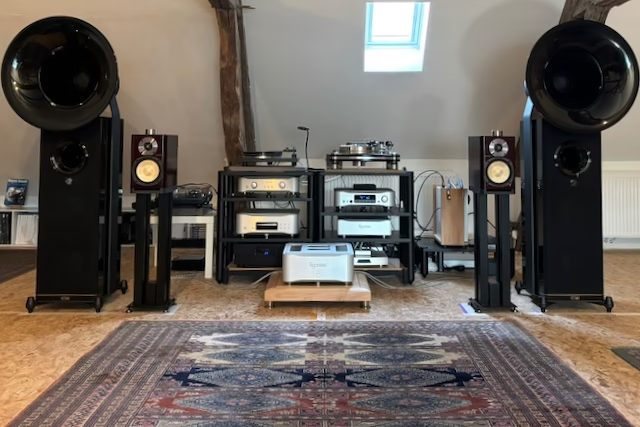
Sound quality is a critical element in the audio experience, shaping how we perceive music and other audio formats. The fundamental aspects include frequency response, clarity, and distortion. Each playing a vital role in the overall sonic perception.
Your System Basics
Frequency response refers to the range of frequencies produced by audio equipment and ability to reproduce sound accurately. Different audio devices may excel in various frequency ranges, influencing how bass, midrange, and treble sounds are represented. Devices characterized by a wide and even frequency response tend to deliver a more natural and balanced audio experience. Because, they can play low, mid, and high frequencies without coloration.
Clarity, on the other hand, relates to the precision with which sounds can be distinguished from one another. High clarity ensures that vocal and instrumental elements can be heard distinctly. And, is essential for enjoying complex musical compositions. Various factors, including the design of a speaker or headphones, can influence clarity. For instance, high-quality drivers and proper acoustic engineering can improve clarity, allowing listeners to experience subtle nuances that might otherwise be lost.
Distortion occurs when sounds are altered from their original form, often resulting in a less enjoyable listening experience. Although some distortion can be pleasing in specific contexts, particularly in genres like rock or electronic, excessive distortion generally detracts from sound quality. Factors such as poor equipment, inadequate amplification, or suboptimal placement of speakers can contribute to unwanted distortion.
In summary, how to improve. By understanding these fundamental concepts of sound quality. Frequency response, clarity, and distortion—empowers listeners to make informed choices. By considering how different components interact, one can effectively enhance their audio system and achieve a superior sound experience.
Upgrading Your Components
To achieve superior sound quality, it is essential to recognize the significance of each component in your audio system. Upgrading key elements such as speakers, amplifiers, and Digital-to-Analog Converters (DACs) can lead to substantial improvements in performance.
Speakers are often considered the heart of any audio system. Quality speakers can reproduce a wider range of frequencies, resulting in more accurate and detailed sound. If your current speakers are outdated or of low quality, upgrading them should be a top priority. Look for specifications such as frequency response, sensitivity, and power handling. When selecting new speakers, it is important to listen to them in a setting similar to your own to ensure they meet your preferences.
Amplifiers play a crucial role in driving your speakers and delivering clarity and detail in sound production. An upgrade in the amplifier can enhance control over the sound output and eliminate distortion at higher volumes. Pay attention both to the wattage and the type of amplifier, such as tube versus solid-state, as these factors can affect overall sound character.
Another component often overlooked is the Digital-to-Analog Converter (DAC). The quality of the DAC can significantly influence how your digital sources translate sound into an analog signal. Higher quality DACs can improve dynamic range and reduce noise. Therefore, if your setup involves streaming or digital file playback, investing in a quality DAC can vastly improve your listening experience.
When contemplating upgrades, assess your entire audio setup and identify bottlenecks that may be holding back sound quality. Additionally, consider how each component interacts with one another, as mismatched components can hinder performance. Prioritize upgrades based on where the most significant improvements can be achieved, and take the time to research options that fit your budget and sound preferences.
Role of Cables in Performance
In any audio setup, the significance of cables is often underestimated. High-quality cables play a crucial role in transmitting audio signals and can dramatically influence the overall sound quality. With a plethora of cables available on the market, selecting the right ones can make a notable difference in your listening experience.
One notable brand that has gained recognition over the past 12 years for its exceptional performance is Perkune Audiophile Cables. Their audiophile cables are designed with precision to deliver the best audio clarity and fidelity. By minimizing signal loss and interference, such cables ensure that the integrity of the sound is preserved from the source to the output device.
Investing in high-quality audio cables can result in several benefits. For instance, they can significantly reduce unwanted noise and distortion, which are common issues with inferior products. Enhanced materials and manufacturing techniques employed in top-tier cables contribute to a more accurate sound reproduction, allowing listeners to experience their favorite music as intended by the artists.
Moreover, using quality cables can also improve the dynamics and depth of the auditory experience. When adequately shielded and engineered, these cables can help in achieving a balanced sound across various frequencies, producing richer bass tones and clearer highs. Perkune audiophile cables exemplify this principle, providing users access to a detailed and immersive sound field.
High-quality products offer durability that ensures they maintain performance over time, making them a wise choice for audiophiles and casual listeners alike. In conclusion, the importance of choosing the right cables in an audio setup cannot be overstated. By selecting reputable brands like Perkune, individuals can elevate their audio experience, ensuring that every note and tone is transmitted with unparalleled excellence.
Sound Treatment and Setup Tips
Achieving optimal sound quality in any listening environment requires careful consideration of several aspects, including room acoustics, speaker placement, and the choice of materials. Addressing these factors can significantly enhance your audio experience, whether in a home theatre, a studio, or a casual listening room.
First and foremost, speaker placement is crucial. Ideally, speakers should be positioned away from walls to reduce reflections that can muddle sound clarity. A common recommendation is to position your speakers at ear level when seated and create an equilateral triangle between the speakers and the listening position, ensuring balanced sound dispersion.
The acoustics of the room itself can either hinder or promote sound quality. Hard surfaces like glass and concrete can lead to excessive reflections, resulting in echoes and a harsh listening experience. To combat this, consider using acoustic panels or foam to absorb sound waves and minimize reverberation.
Additionally, utilizing soft furnishings can enhance sound absorption. Items such as heavy curtains, carpets, and plush upholstery can dampen high-frequency sounds and help to balance the overall acoustic profile of the room. For instance, positioning a thick rug in front of speakers can mitigate any sound distortion caused by hard flooring.
In practical terms, consider real-world setups. For example, a dedicated home theatre may incorporate a combination of wall-to-wall carpets and thick curtains to create a cozy listening environment. Similarly, professional studios often employ bass traps and diffusers to manage sound waves effectively for clearer audio playback.
How to improve
In conclusion, by attending to these critical factors—speaker placement, room acoustics, and appropriate materials—you can significantly elevate your audio experience. Implementing these strategies will create a more pleasant and immersive listening environment, tailored to your specific setup and preferences.
Perkune.net I Professional service