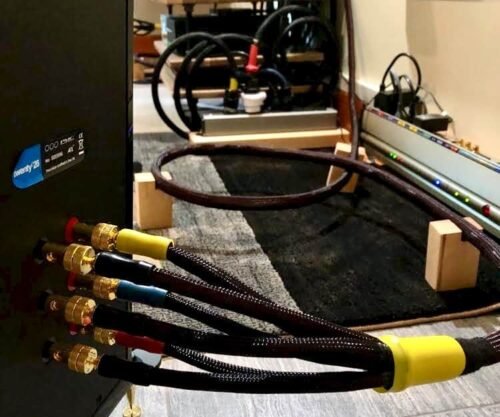
 The importance of a good cable is one that reliably carries a signal in the conditions of a particular setup. Its quality is not established by a high price, prestigious branding, or claims of dramatic improvements. Instead, assess whether its design suits the equipment, distance, and environment, and whether it continues to perform without faults. A correctly specified, undamaged cable is usually sufficient; spending more does not automatically make music clearer or more detailed. Practical suitability matters more than status or elaborate marketing language.
The importance of a good cable
Several construction details affect that suitability. Conductor size should be appropriate to the signal and cable length, especially for speaker runs, where an overly thin or long cable can increase resistance and cause losses. Connectors should fit securely, make dependable contact, and be assembled to withstand ordinary use. Shielding can help reduce unwanted noise when a cable runs near power supplies, lighting, or other sources of electrical interference. Equipment compatibility matters too: impedance and capacitance can be relevant in some analog connections, particularly with sensitive or high-impedance devices. Durable insulation and strain relief help prevent damage over time.
Different cable types have different requirements. Analog signal cables carry continuously varying electrical signals, so connector condition, suitable shielding, and appropriate electrical properties can matter. Speaker cables carry more current and are generally selected for conductor size and run length rather than elaborate shielding. Digital cables transmit data, and a compliant, intact cable normally works correctly; a poor connection, excessive length for its specification, or damaged cable may instead cause dropouts or loss of signal. Across all types, unsuitable length, faulty construction, loose connections, and interference can create audible problems such as hum, crackle, reduced level, or interruptions. Choosing a cable matched to the job is therefore the sensible standard—not choosing the most expensive option.
A Cable difference
A cable can make an audible difference when its electrical properties are poorly suited to the equipment or when it is damaged, inadequately shielded, or used beyond its practical limits. In an analog connection, excessive resistance or capacitance can interact with the source’s output circuitry and the receiving input. Depending on the devices and cable length, that interaction may reduce high-frequency response or alter the signal level. Poor shielding or faulty connectors can also allow mains hum, radio-frequency interference, or other noise to enter the audio path. These problems are most likely to be noticeable in vulnerable systems or electrically noisy environments; they are not an inevitable result of using an ordinary, correctly specified cable.
Speaker cables carry more current than typical line-level interconnects, so their resistance can reduce the voltage that reaches the speakers. The potential impact depends on cable length, conductor size, speaker impedance, and the amplifier’s output characteristics. A long run of thin cable may cause a greater loss than a short run of suitably sized conductors. In some systems, the interaction between cable resistance and a speaker’s changing impedance can also affect frequency response, though the magnitude varies. Choosing an appropriate gauge for the distance and load is therefore a practical way to limit losses. Beyond that, replacing a sound, adequately sized speaker cable is not guaranteed to produce an audible improvement.
The Digital Cable
Digital connections behave differently. A functioning cable within the relevant specification generally transfers the same digital data, so changing it does not ordinarily create a subtle shift in tonal balance. However, a damaged, poorly terminated, or out-of-spec cable may fail to maintain a reliable connection. Depending on the format, symptoms can include dropouts, clicks, interruptions, or complete loss of signal. These are signs of transmission errors or connection failure, not evidence that one cable is rendering the audio with a different character while both transmit correctly. In practice, cable choice matters most when it prevents a specific electrical or reliability problem; upgrades without such a problem may yield no audible change.
Claims that a cable upgrade produces stronger dynamics, clearer detail, deeper bass, or a wider soundstage should be assessed in the context of the whole audio system. Dynamics are changes between quieter and louder passages in music. A cable does not add musical information that is absent from a recording, nor can it compensate for limitations in a source component, amplifier, speaker, or room. If the signal already reaches the equipment cleanly and reliably, replacing a functioning cable is not expected to reveal details that were never being lost.
The connection
There are, however, practical situations in which a cable or connection can affect what listeners hear. A loose, damaged, or poorly fitted connector may cause dropouts, crackling, or an unstable signal. Excessive resistance in an unsuitable or very long speaker cable can reduce the signal reaching speakers, while interference may introduce audible hum or noise in a vulnerable setup. If a fault is severe enough to cause meaningful signal loss, noise, or disruption, it can affect perceived clarity and, in some cases, dynamics. Correcting that bottleneck restores normal operation; it does not create extra performance beyond the system’s capabilities.
To judge a reported improvement, distinguish measurable, repeatable changes from expectation and sighted-listening bias. Knowing which cable is in use can influence attention and interpretation, especially when differences are subtle. Where practical, compare cables at matched volume, keep other equipment and settings unchanged, and repeat the test without relying on appearance or price as clues. Before buying a more expensive cable, check that plugs are fully seated, inspect leads for damage, confirm that speaker-cable length and gauge suit the installation, and review system setup. These basic checks can resolve genuine problems at little cost. A well-made cable with appropriate specifications is useful for dependable connections, but higher price alone does not establish better sound. The sensible aim is a clean, stable signal—not an expectation that the cable will transform the recording or the equipment reproducing it.
Cable identification
Start by identifying the cable type and connection standard required by each device. Speaker wire, balanced XLR, unbalanced RCA, and digital connections serve different purposes and are not interchangeable simply because their plugs appear similar. Check the equipment manuals or labels, then select a cable that matches the connection and is compatible with the system.
Measure the route between components before buying. Allow enough length to connect equipment without tension or sharp bends, but avoid excess cable coiled behind the system. For speaker runs, choose a conductor gauge appropriate to the cable length and speaker impedance: longer runs generally benefit from thicker conductors to limit resistance. For analog connections in electrically noisy environments, suitable shielding can help reduce interference. A balanced connection may also be preferable when the equipment supports it and the run is long.
Prioritize dependable connectors and solid construction over decorative finishes or unsupported performance claims. Plugs should fit securely, and the cable should tolerate ordinary movement and installation. Replace cables that are visibly damaged, poorly fitted, or associated with intermittent sound. A cable that cuts out when moved, produces crackle, or creates an unreliable connection is a practical problem regardless of its price.
Evaluation
When diagnosing noise or dropouts, change one variable at a time. Reseat the connections, substitute a known-working cable, and listen for hum, crackling, or interruptions. This makes it easier to identify whether the cause is the cable, a connector, nearby electrical equipment, or another component. If comparing alternatives for sound quality, keep the source, recording, position, and listening conditions consistent. Match playback levels as closely as possible; even a small volume difference can influence preference. A blind comparison, where practical, can further reduce expectation bias.
The importance of a good cable
A good audio cable is one that suits the system, performs reliably, and addresses a real need. Once basic requirements are met, spending more on premium cables may yield less benefit than improving speakers, room acoustics, placement, or setup. Choose for compatibility and dependable performance rather than assuming that a higher price guarantees an audible improvement.
Perkune Audiophile Cables